





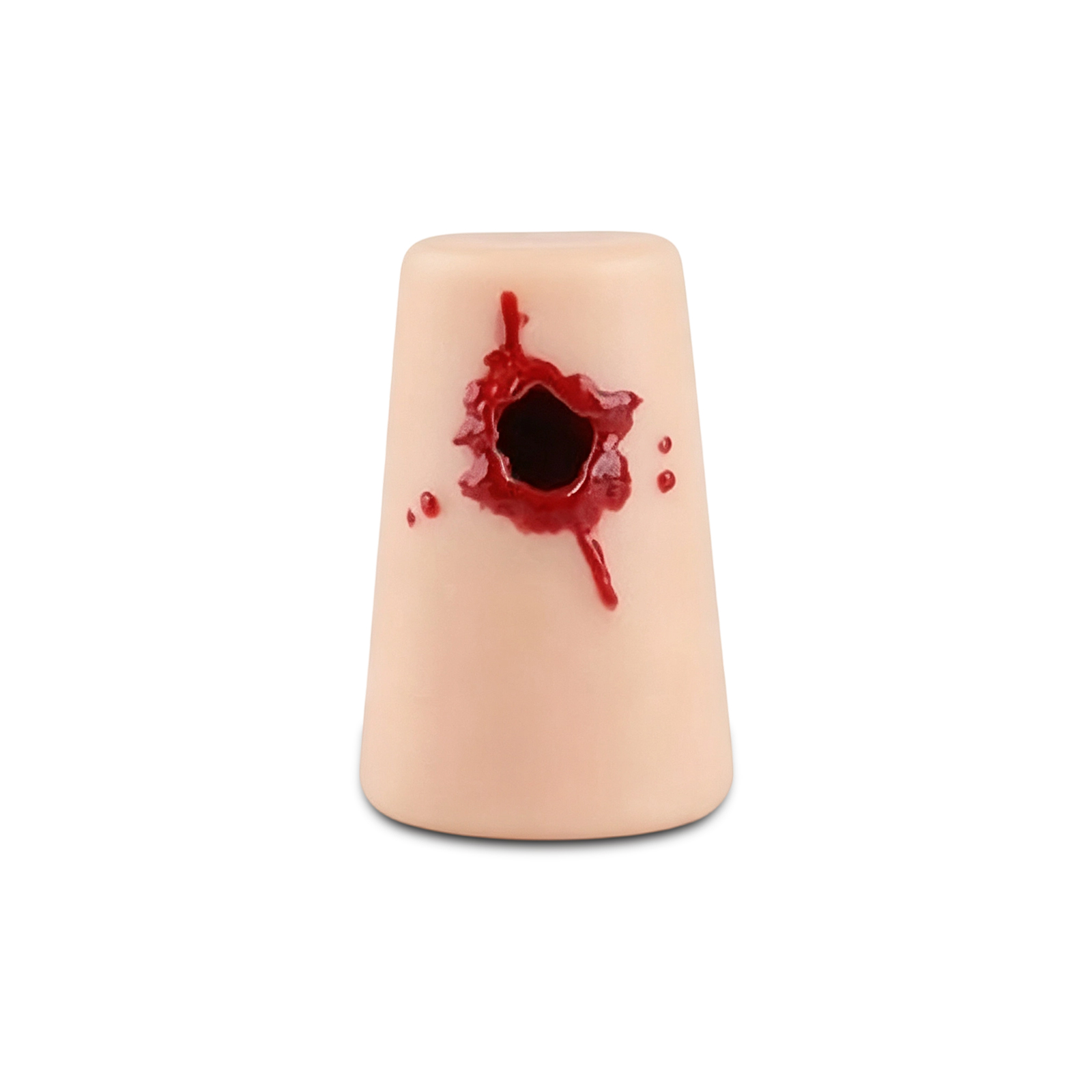


Highly Realistic Gunshot Wound Model

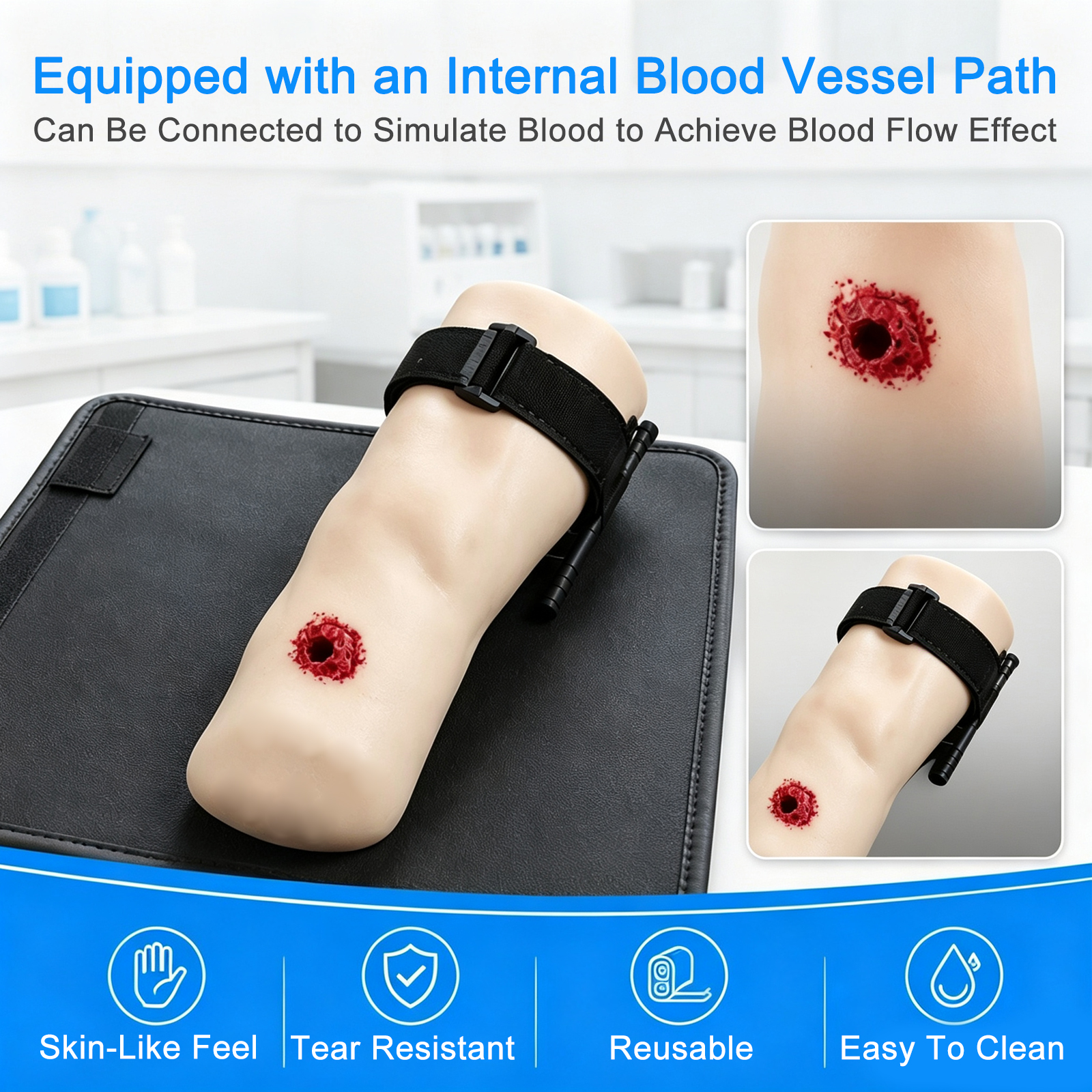
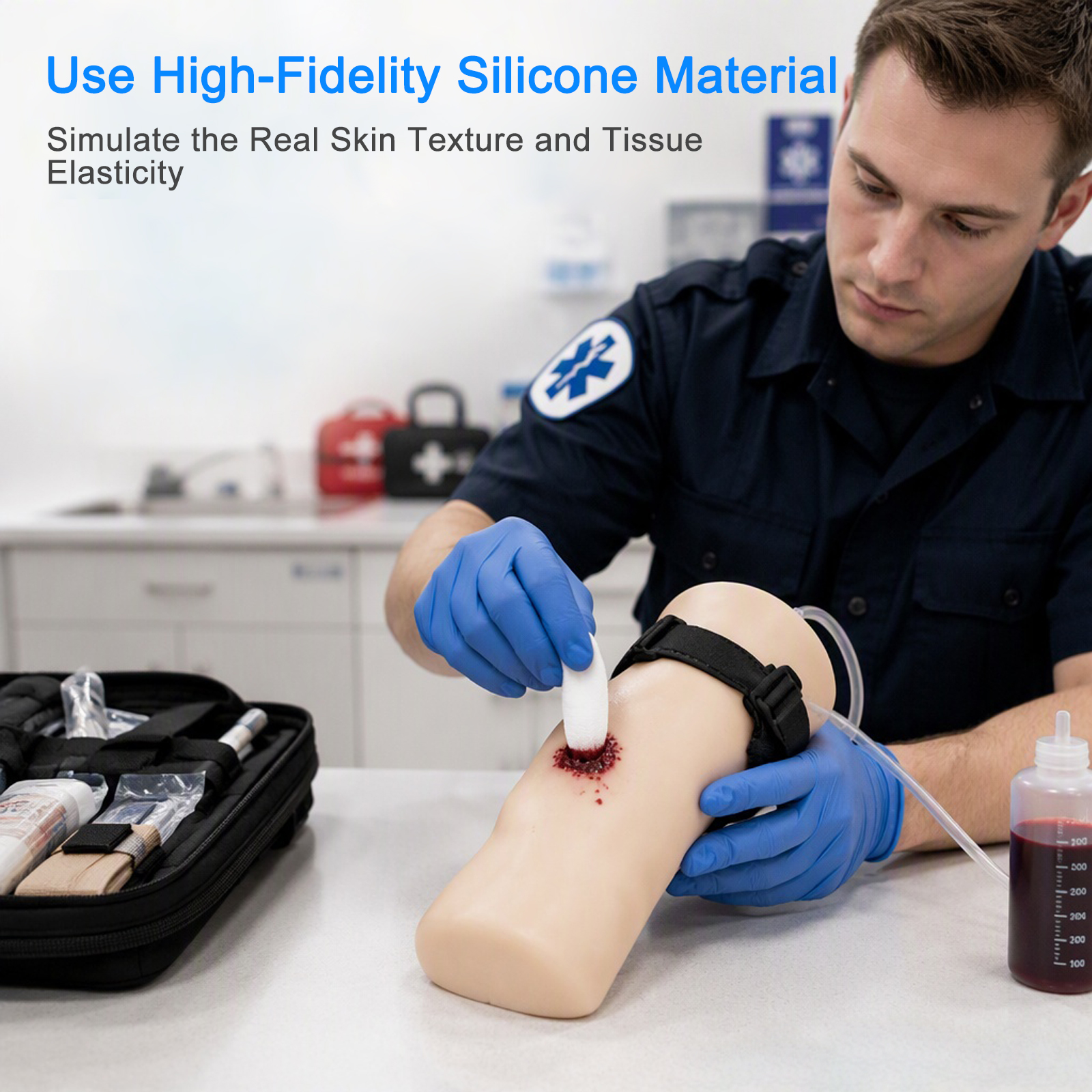
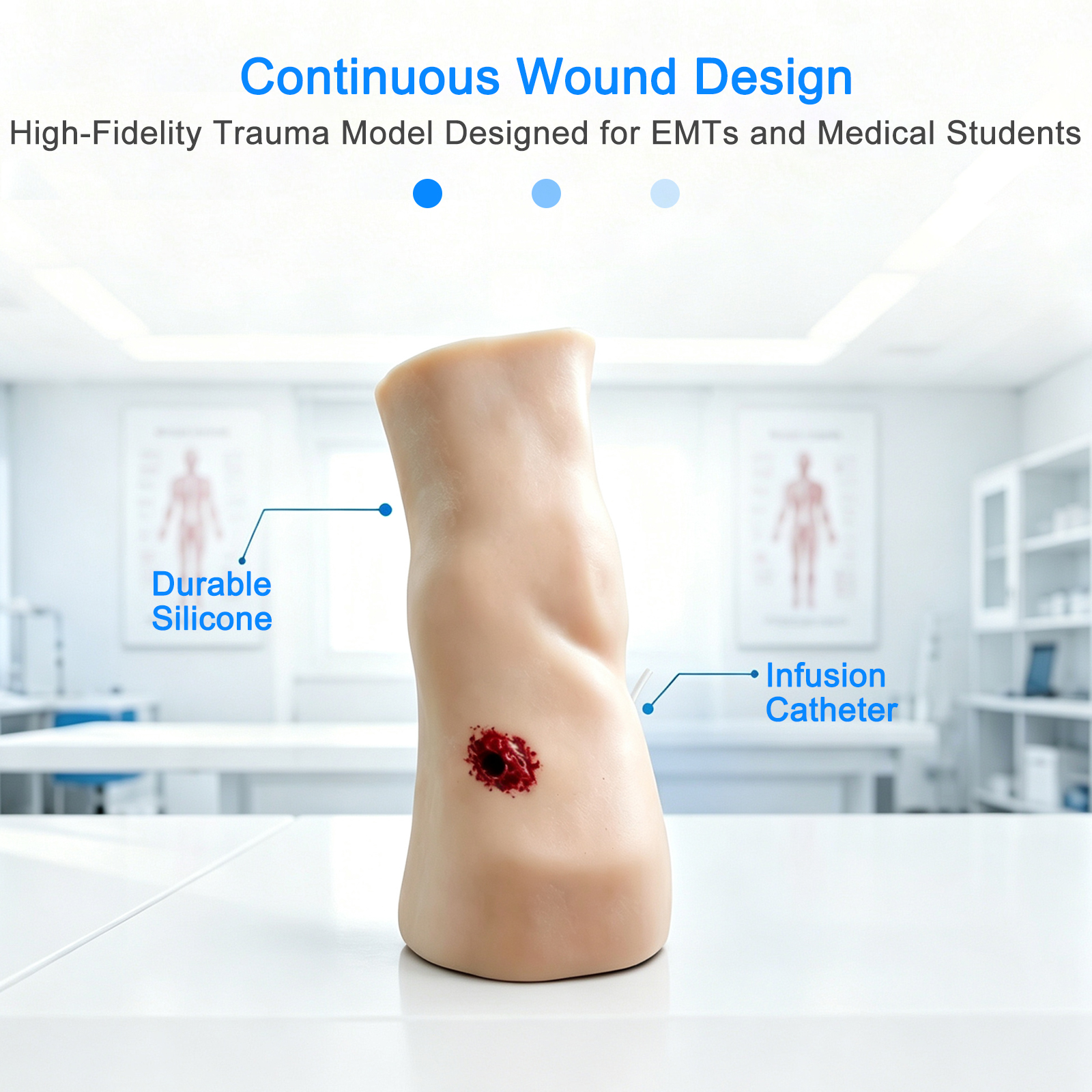
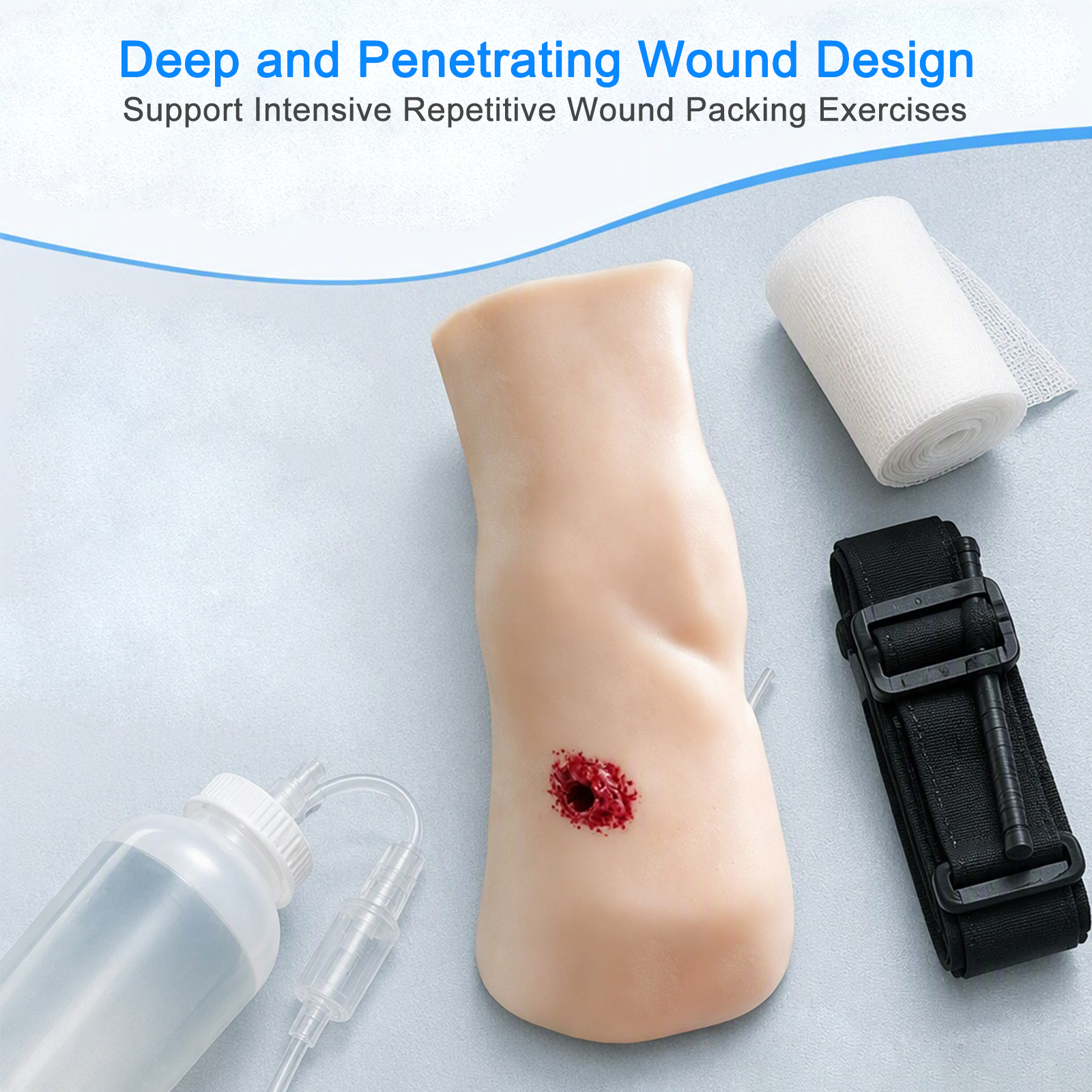
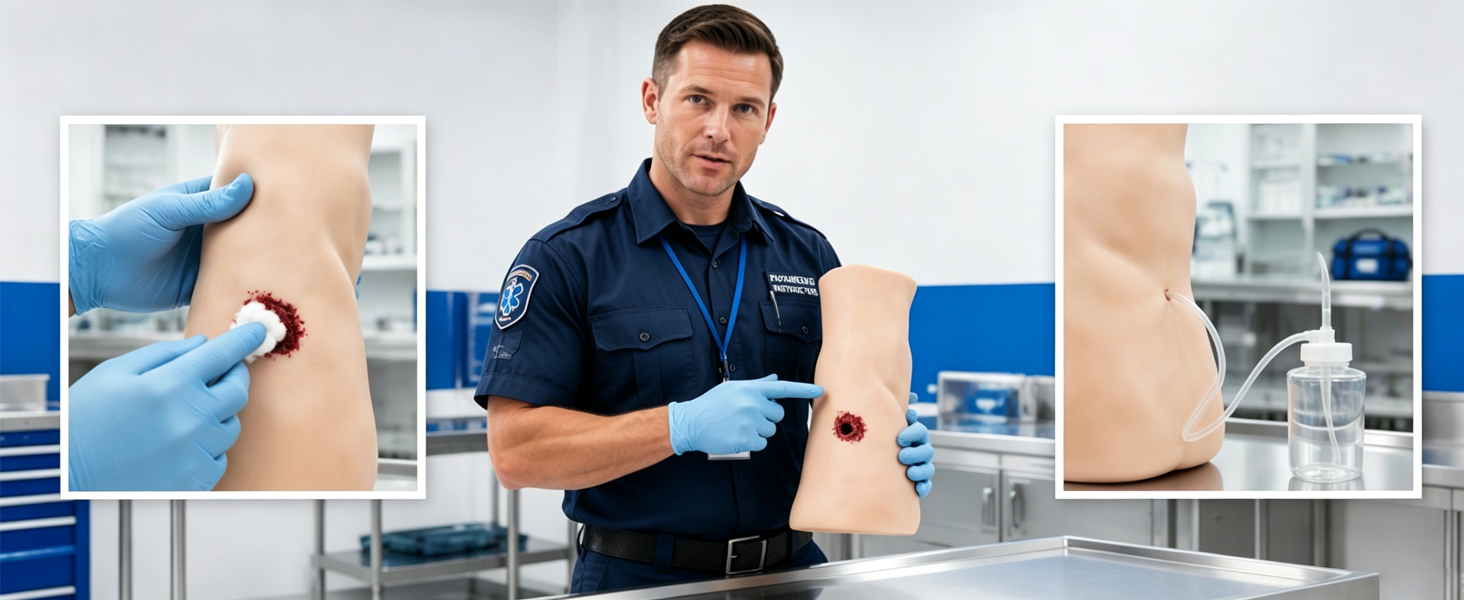
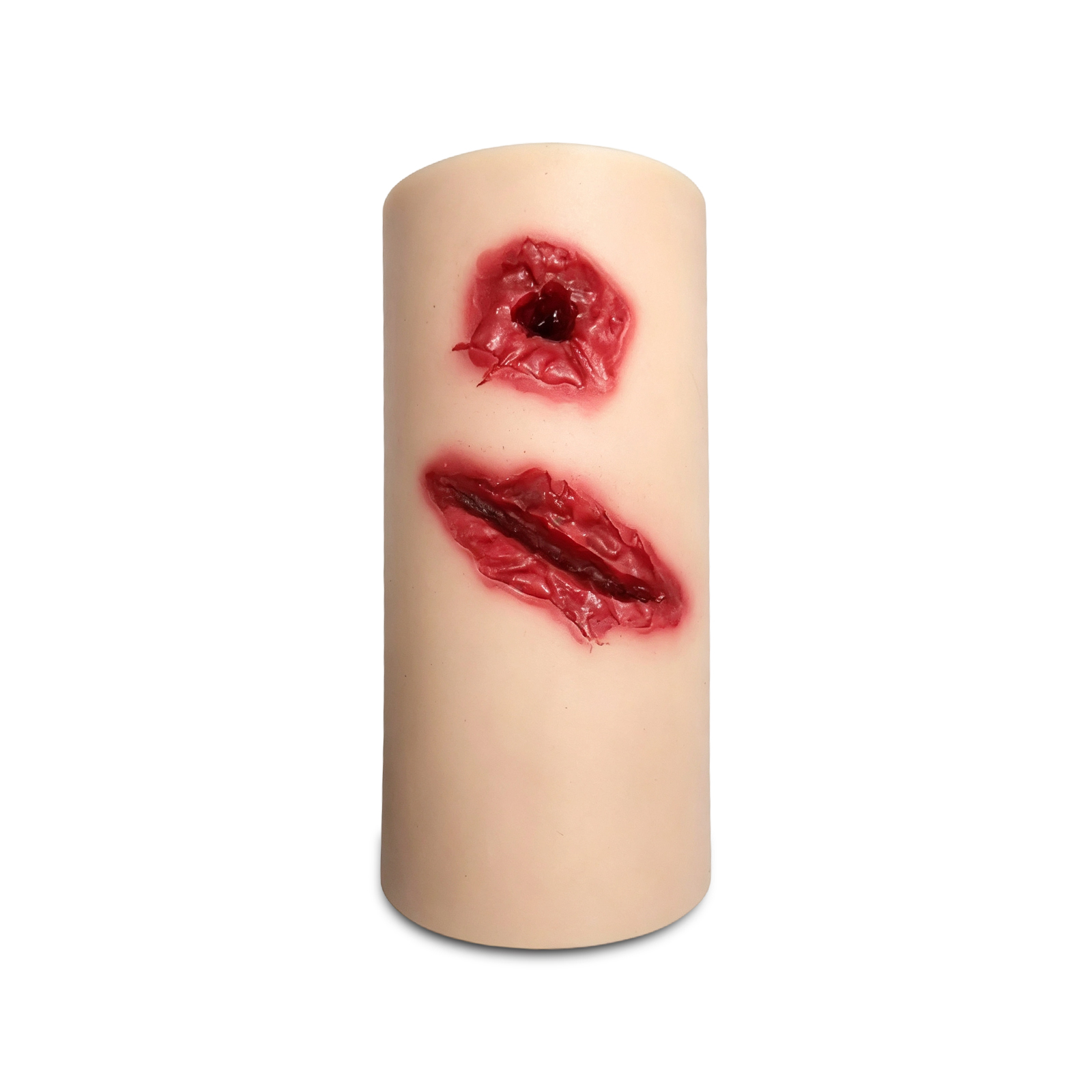
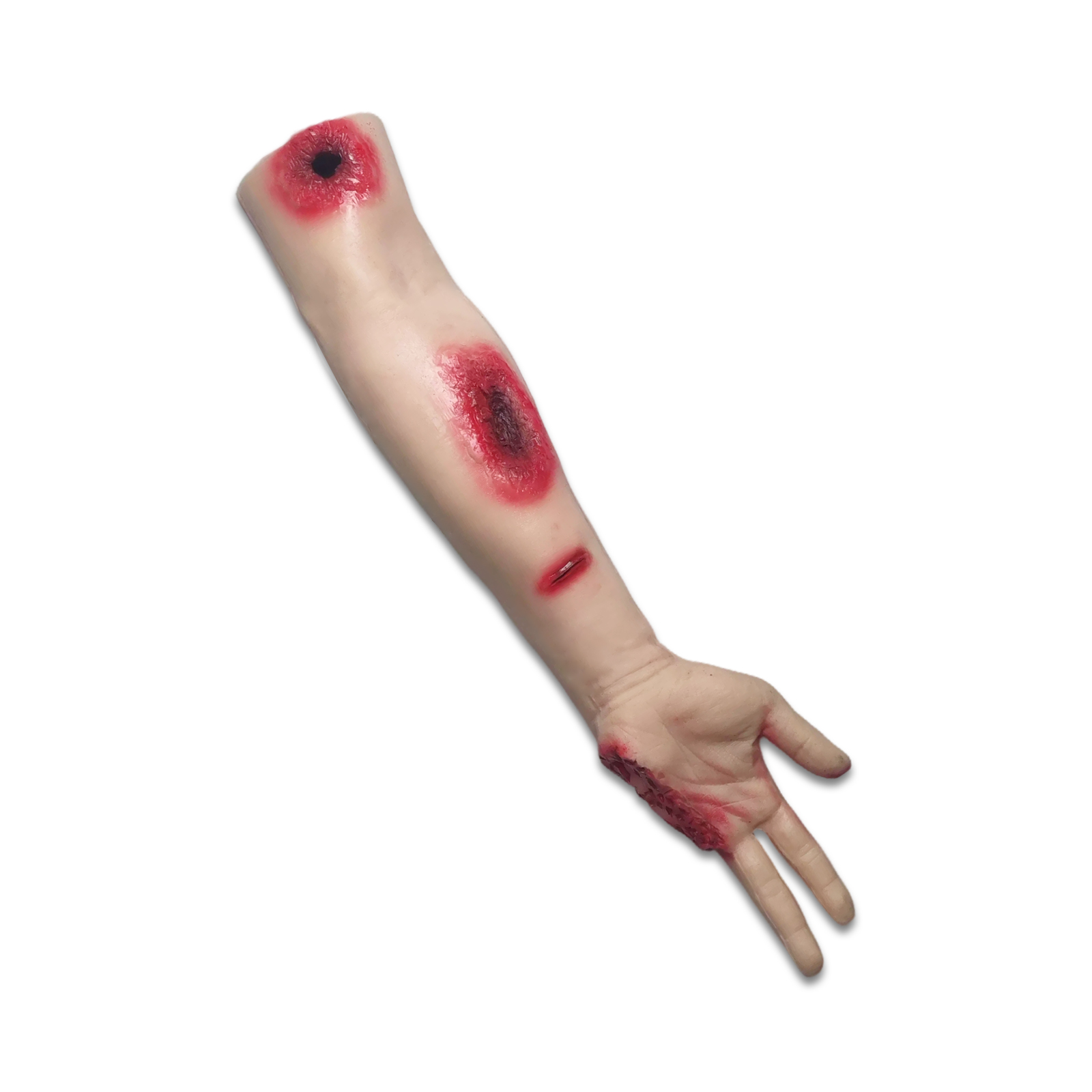
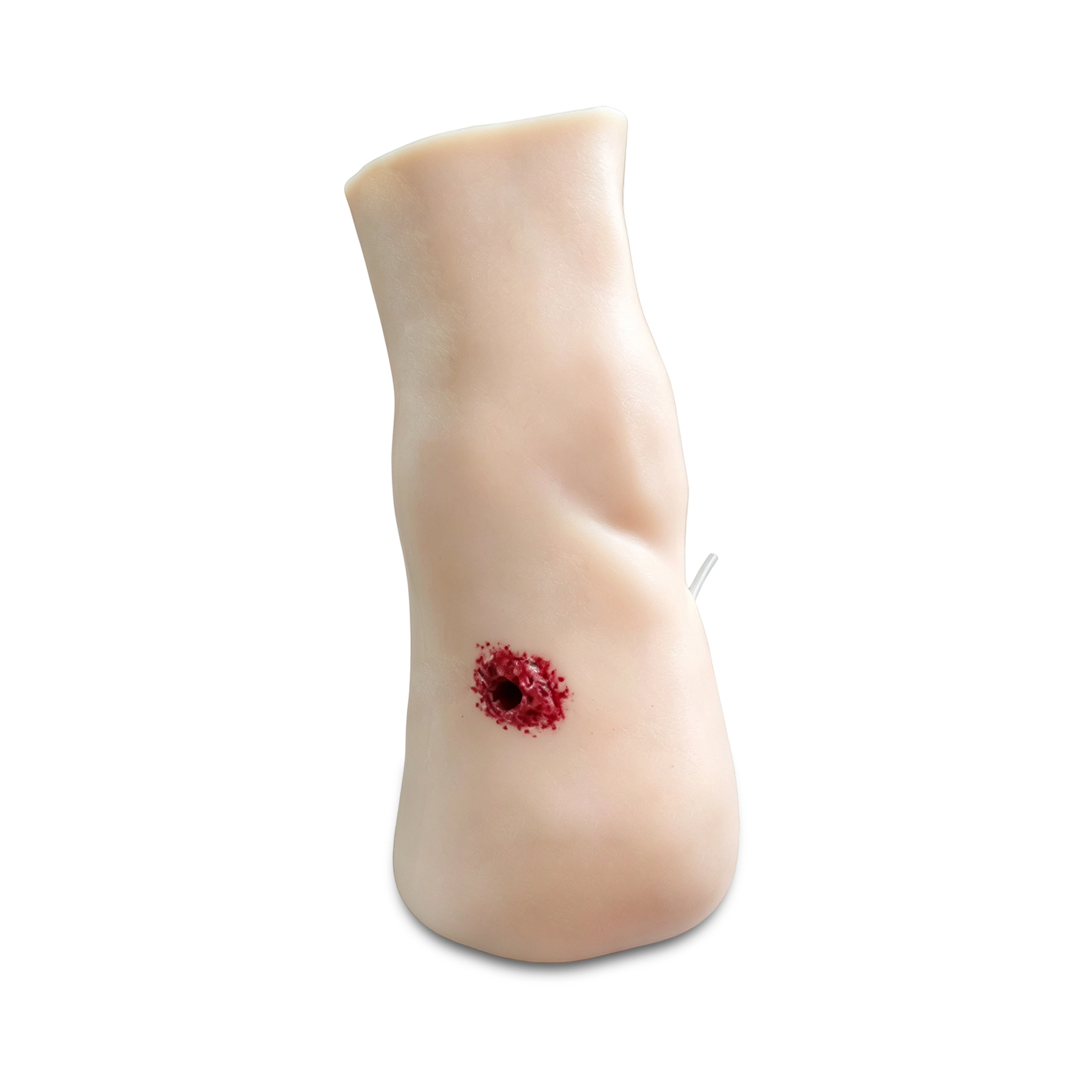
1. **Highly realistic gunshot wound wounds**: The silicone material accurately replicates the penetrating gunshot wound surface and tissue texture, with a realistic depth of the wound cavity, and accurately simulates the massive bleeding pattern of battlefield injuries, providing an immersive first aid training experience.
2. **Controllable arterial bleeding simulation**: An adjustable bleeding system that regulates the flow rate, simulating pulsatile arterial massive bleeding; after correct hemostasis and bandaging, the bleeding stops, providing intuitive training feedback.
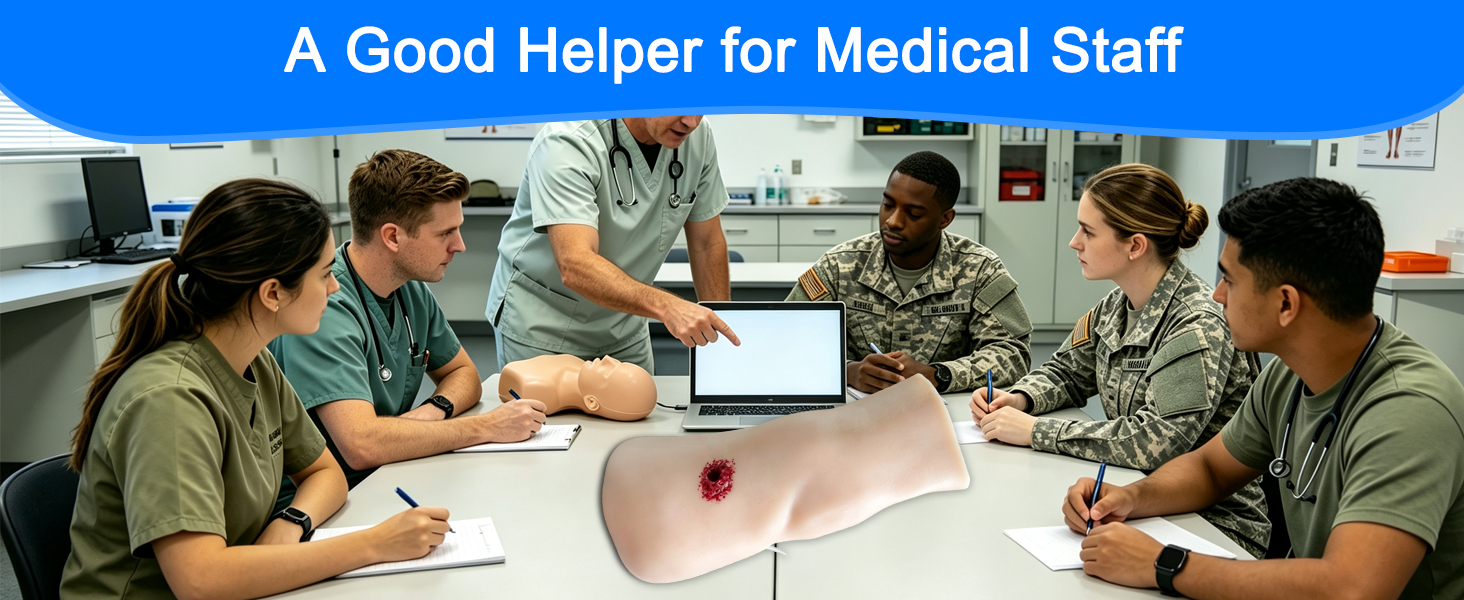
3. **Comprehensive multi-skills practical training**: Supports operations such as using tourniquets, wound packing, applying pressure bandages, and using hemostatic dressings, suitable for battlefield first aid, emergency care, firefighting, and military police hemostasis training.
4. **Washable and reusable**: The soft silicone is tear-resistant and easy to clean and rinse, suitable for large-scale, high-frequency practical teaching, and long-term repeated training use.
Category :

Related Products

Wound Suturing Training Model

1. Simulated Skin Layers: Layered silicone simulates the epidermis, dermis, and subcutaneous tissue, providing a texture similar to human skin, realistic needle insertion resistance, and a realistic clinical suturing feel. 2. Pre-set Wound Types: Equipped with incisions of various lengths and shapes, allowing for practice of multiple suturing techniques, including interrupted sutures, continuous sutures, and intradermal sutures. 3. Suitable for a Full Range of Suturing Practices: Supports the use of instruments such as needle holders, suture needles, suture thread, and forceps, allowing students to practice the complete process of needle insertion, withdrawal, knotting, and thread cutting. 4. Durable, Easy to Clean, and Reusable: The elastic silicone has excellent self-healing properties; needle holes close automatically after suturing, and stains can be easily wiped away. Ideal for frequent hands-on training by students and healthcare professionals.

Gunshot Wounds, Burns, and Amputated Fingers Model

1. Highly Realistic Simulation of Complex Injuries: Made of silicone, this model replicates three different wound types—gunshot wounds, burns, and amputated fingers—with wound textures, skin tones, and tissue sensations that closely resemble real-life injuries, making it ideal for teaching first aid for complex injuries. 2. Versatile Training for Multiple Procedures: Supports practice of various first aid skills, including bandaging and immobilizing an amputated finger, protecting burn wounds, packing and stopping bleeding from penetrating wounds, and applying dressings, providing one-stop, multi-scenario training. 3. Sturdy Construction for Rigorous Training: Made of flexible silicone, it is tear-resistant and durable. The severed finger section is securely attached, and the model retains its shape even after repeated bandaging and dressing changes, making it suitable for high-frequency training. 4. Easy to Clean and Reusable: The smooth surface allows coupling agents and simulated bloodstains to be easily rinsed off or wiped away, and disinfection is simple. It is suitable for routine training in medical, emergency, military, and law enforcement settings. Translated with DeepL.com (free version)

Gunshot Wound Simulation Hemostasis Training Model

1. **Highly realistic gunshot wound wounds**: The silicone material accurately replicates the penetrating gunshot wound surface and tissue texture, with a realistic depth of the wound cavity, and accurately simulates the bleeding pattern of severe battlefield injuries, providing an immersive first aid training experience. 2. **Controllable arterial bleeding simulation**: An adjustable bleeding system with variable flow rate, simulating pulsatile arterial massive bleeding; after correct hemostasis and bandaging, the bleeding stops, providing intuitive training feedback. 3. **Comprehensive multi-skills training**: Supports operations such as using tourniquets, packing wounds, applying pressure bandaging, and using hemostatic dressings, suitable for battlefield first aid, emergency care, firefighting, and military police hemostasis training. 4. **Washable and reusable**: The soft silicone is tear-resistant and easy to clean and rinse, suitable for large-scale, high-frequency practical teaching, and long-term repeated training use.

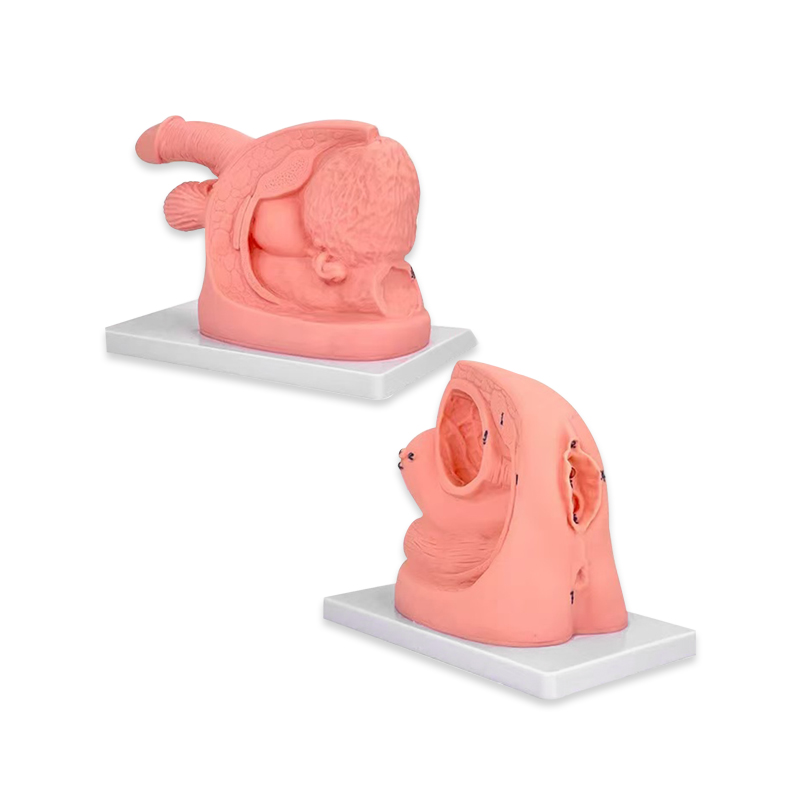
Basic Male and Female Catheterization Training Model Set

1. A set featuring both male and female models, with clear and intuitive anatomical structures This set includes both male and female catheterization training models, featuring 1:1 replicas of key urinary anatomical structures such as the urethra and bladder. Key anatomical landmarks are clearly marked, allowing for a direct comparison of the physiological differences between male and female urethras. It is suitable for teaching urinary anatomy and can also be used for demonstrating and practicing basic catheterization techniques, helping learners quickly develop a fundamental spatial understanding of the anatomy. 2. Covers basic catheterization procedures to meet the needs of introductory training It helps beginners standardize their procedures and master fundamental techniques such as insertion angle and force, making it an ideal tool for introductory catheterization training. 3. Durable, cost-effective materials ideal for high-frequency basic training Designed to withstand daily, high-frequency basic training without damage, these units feature a smooth, easy-to-clean surface that can be wiped down with medical-grade disinfectants, meeting basic infection control requirements for training facilities. Compared to high-end models with advanced features, they offer a lower cost, making them suitable for bulk purchases by educational institutions and group classroom instruction. They provide outstanding value for long-term training use. 4. Integrated, Sturdy Base for Convenient and Hassle-Free Teaching Each model comes with an integrated white base that ensures stability and prevents slipping. This design keeps the model securely in place during classroom demonstrations and student hands-on practice, allowing for simulation positions that closely mimic real-world clinical scenarios. The models are compact in size, taking up minimal space in training areas, and are easy to store and transport. They are suitable for a variety of settings, including classrooms, training labs, and community health centers. 5. A versatile introductory teaching aid suitable for multiple scenarios, offering strong adaptability for educational use It is widely applicable in various settings, including basic nursing education at medical schools, training for the nursing licensure exam, introductory training in primary healthcare skills, basic training for nursing skills competitions, and demonstrations for health education and outreach. As a cost-effective teaching aid for learning standardized catheterization techniques, it can be used for classroom demonstrations as well as for students’ independent practice, helping beginners quickly build a solid foundation in practical skills.

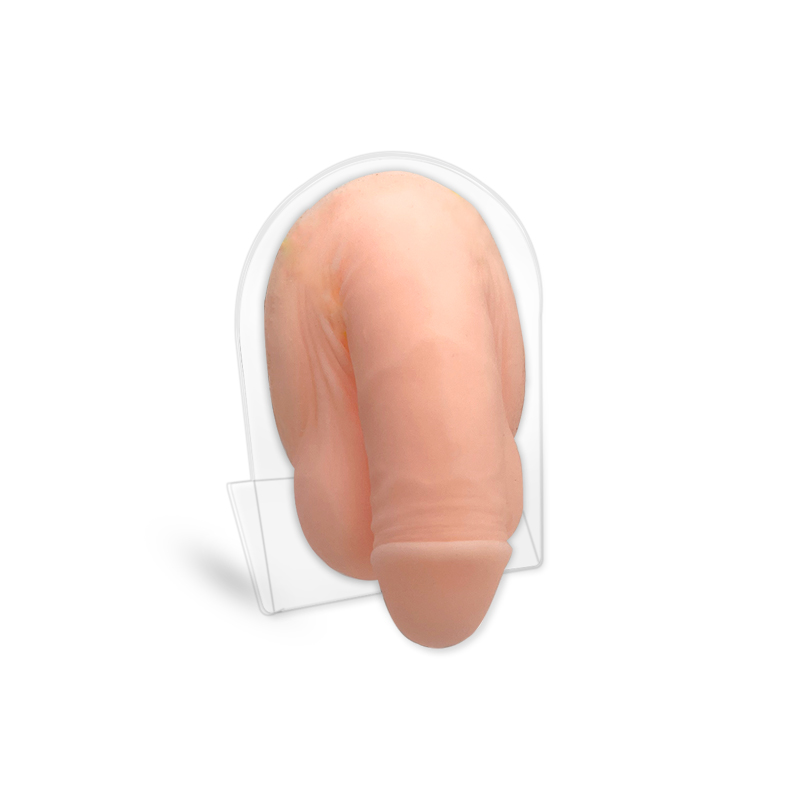
Male Catheterization and Bladder Puncture Training Model

1. Accurately replicates the male urinary anatomy and provides a highly realistic tactile experience. The 1:1 scale simulated urethra is crafted from medical-grade soft silicone. The changes in resistance during catheter insertion, the sensation of obstruction at narrow points, and the sensation of entering the bladder all closely mimic real clinical sensations. This helps learners quickly develop a correct spatial understanding of the anatomy and effectively minimizes the risk of urethral injury during procedures. 2. Dual-Function Comprehensive Coverage: Supports Full-Process Training for Catheterization and Puncture This model combines two core training functions: it supports the full range of basic nursing procedures, including male catheterization, indwelling catheter fixation, bladder irrigation, and urine drainage; and provides clear feedback in the form of simulated urine flow upon successful puncture. A single model covers the core training needs for both urological nursing and interventional procedures, offering outstanding value for money. 3. Medical-grade, durable material for long-lasting high-frequency training Made from high-density medical-grade simulation silicone, this product is safe, odorless, flexible, and wear-resistant, capable of withstanding thousands of catheter insertions and repetitions of puncture. It resists urethral laxity even with long-term use, maintaining consistent tactile feedback and structural performance without degradation. The smooth, non-porous surface allows for wiping and disinfection with medical-grade disinfectants, meeting infection control requirements in training facilities and effectively reducing long-term training supply costs. 4. Ergonomic design for ease of use and strong versatility Equipped with a sturdy, non-slip base, the model remains stable during operation, and its simulated body position closely mirrors real clinical scenarios. The modular design allows for easy refilling of simulated urine, and certain wear-and-tear parts can be replaced individually. It is compatible with standard clinical medical supplies such as catheters, puncture needles, syringes, and drainage bags, eliminating the need for custom accessories. Training can begin immediately upon unboxing, making it suitable for a variety of settings including classrooms, training labs, and clinical departments. 5. Versatile training aids for multiple scenarios: A critical need for standardized skills training Widely applicable in various settings, including basic nursing education at medical schools, skill assessments for medical and nursing residents, training for urology specialty nurses, skill enhancement for primary care providers, and preoperative simulation for clinical procedures. It serves as the core training tool for standardized and regulated training in male urological procedures, helping novices quickly master fundamental skills while also facilitating skill assessments and instructional demonstrations, thereby effectively reducing the risk of errors during clinical practice.

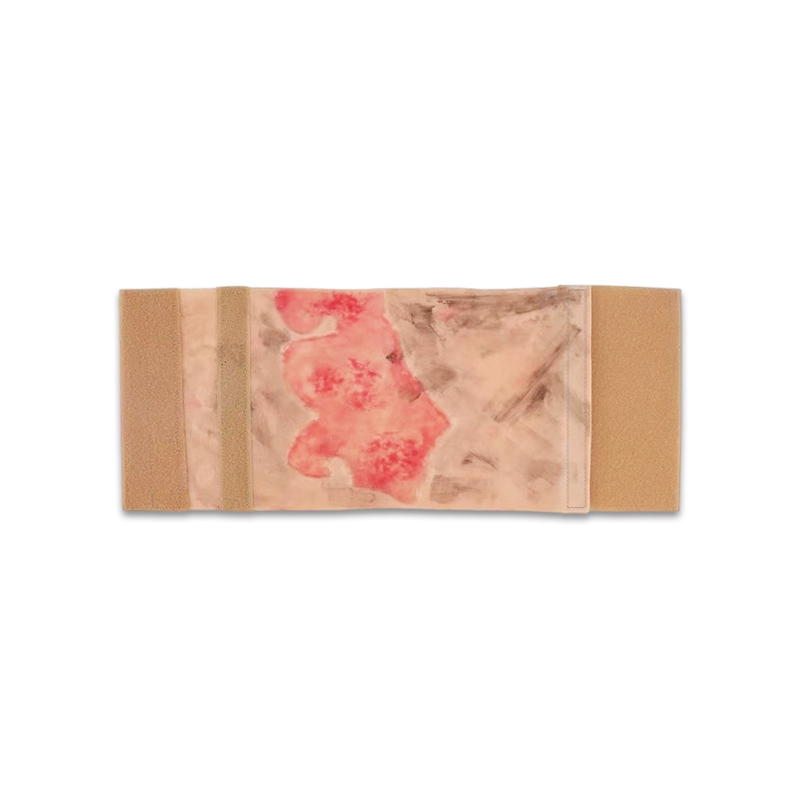
Wearable Limb Burn Wound Training Model

1. Highly Realistic Simulation of Multiple Burn Wound Grades Accurately replicates the morphology of burn wounds at various depths on limbs, simultaneously presenting both superficial second-degree erythematous wounds and deep second-degree eschar-like injuries. It realistically recreates the color, texture, and visual characteristics of tissue damage in burned skin, helping learners quickly master burn grading assessment and providing wound assessment training that closely mirrors real clinical cases. 2. Wearable Strap Design for Realistic Clinical Scenarios Features a wide Velcro strap structure that securely fastens to various body parts, including the arm and lower leg, and accommodates limbs of different sizes. This design overcomes the limitations of flat-surface training by simulating the actual positions and angles of clinical burn care, making dressing changes and bandaging exercises more immersive and practical. 3. Comprehensive Coverage of Burn Care Skills Supports training in the full spectrum of burn care procedures, including wound grading assessment, debridement and disinfection, application of medicated solutions, dressing changes, compression bandaging, and cold therapy. Compatible with various burn dressings and care supplies, a single model meets all training needs for foundational burn care skills. 4. Medical-Grade Simulated Material: Durable and Easy to Clean Made from high-quality medical-grade simulated skin material, it features a flexible, skin-like texture that is safe and odor-free. It withstands repeated wiping and disinfection, as well as repeated application and removal of dressings, without cracking, peeling, or fading. Capable of supporting hundreds of training sessions, it is easy to clean and maintain, offering excellent value for practical training. 5. Versatile Training Tool for Multiple Scenarios Widely applicable in various settings, including burn care instruction at medical schools, pre-service training for clinical nurses, emergency response drills, specialized burn care assessments, and public health education. It serves as a dedicated teaching tool for standardized and regulated burn care skills training.

Wearable Open Fracture Training Model for the Limb

1. Highly Realistic Reproduction of Open Fracture Wounds Accurately replicates the typical trauma patterns of open fractures in the limbs. The simulated exposed bone ends, combined with deep soft tissue wounds, recreate the realistic visual appearance and structural layers of exposed bone and oozing blood. The medical-grade silicone skin layer closely mimics the tension and texture of real human skin, highly replicating the tactile sensation experienced during clinical procedures, making trauma management training more clinically relevant. 2. Wearable Design for Realistic Operational Scenarios Equipped with an adjustable strap system, it can be securely fastened to various body parts such as the arm or thigh, overcoming the limitations of flat-surface training. It simulates the actual body positions and operational angles encountered in pre-hospital emergency care and on-site treatment, making training in hemostasis, bandaging, and immobilization more aligned with real-world emergency scenarios and enhancing practical response capabilities. 3. One Model, Multiple Uses: Comprehensive Trauma Skills Training Supports full-process trauma emergency training, including wound assessment, debridement and disinfection, pressure hemostasis, fracture reduction, wound suturing, pressure bandaging, and limb immobilization. It can be used in conjunction with emergency equipment such as splints and tourniquets. A single model meets the training needs for multiple surgical skills related to open fractures as well as basic emergency response techniques. 4. Medical-Grade Materials: Durable and Built to Withstand Repeated Practice Crafted from high-quality medical-grade silicone and simulated bone materials, the model is safe and odor-free. The skin layer is flexible and tear-resistant, withstanding needle punctures and repeated suturing procedures without leaving needle holes or cracking and deforming. The simulated bone ends are structurally stable and withstand repeated reduction and immobilization procedures. A single model can support hundreds of training sessions, offering a long service life and effectively reducing training costs. 5. Versatile Professional Training Tool for Multiple Scenarios Widely applicable in medical schools for teaching external medicine and emergency medicine, in hospitals for clinical trauma skills training for medical staff, in emergency centers for pre-hospital emergency response drills, in combat casualty care training, and for nursing skills assessments. It serves as a specialized teaching tool for standardized and regulated training in the management of open fractures and trauma.

Practical Eye Anatomy Training Module

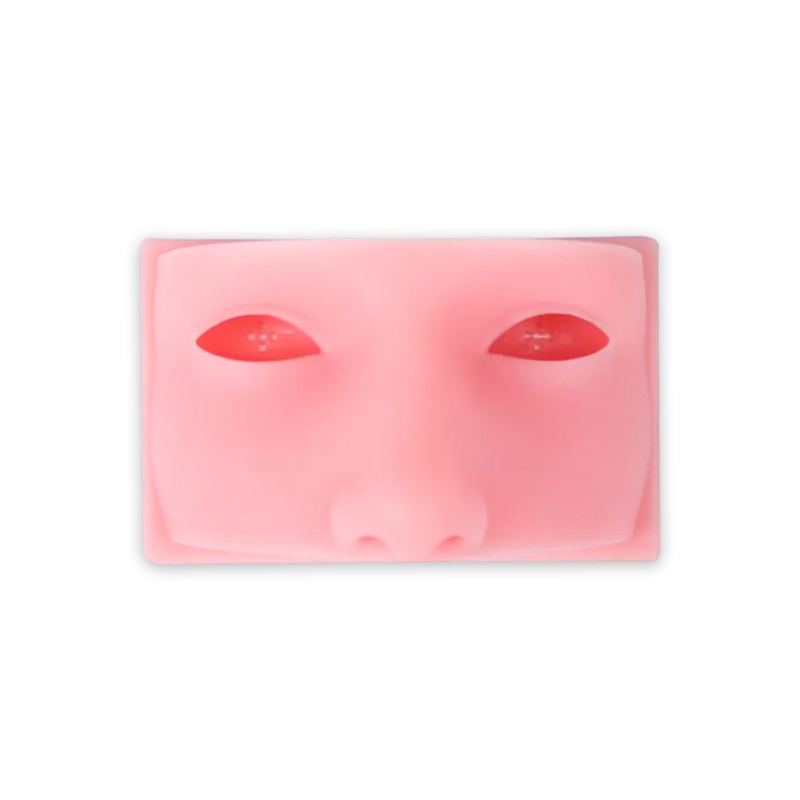
1. Highly Realistic 3D Eye Anatomy Accurately replicates the three-dimensional structure of a human eye and the contours of the surrounding soft tissues. Features a built-in simulated eyeball structure that fully depicts key anatomical landmarks such as the eyelids and eyelid margins. The silicone skin layer closely mimics the tension and texture of real human skin, providing a highly realistic needle insertion sensation that closely replicates clinical procedures, helping practitioners precisely control the angle and depth of needle insertion. 2. Medical-Grade Silicone: Durable and Suitable for Repeated Practice Made from high-quality medical-grade silicone, this material is safe, odorless, and features a supple, elastic texture. It withstands repeated needle punctures, suturing, and injection procedures. Even after repeated use, it resists cracking and leaves minimal visible needle marks. A single model supports hundreds of practical eye training sessions, offering a long service life and excellent value for money. 3. Professional-Grade Eye Skills Training Tool Widely used in ophthalmology education at medical schools, clinical medical skills assessments, training for ophthalmologists, and practical exercises for medical aesthetic eye procedures, this is a specialized teaching tool designed for standardized and regulated training in eye surgical skills.

0
Inquire for more cooperation or product information.
We will contact you within 1 working day, please check your email.
Highly Realistic Gunshot Wound Model
Company Name
Name
Mail
Mobile phone
Message

Send

Yiman

We reply immediately
Welcome to our website. Ask us anything 🎉

Start Chat with: